Webinar I: Censorship, Art Criticism, and Freedom of Expression — Lessons from Georgia and Germany
Webinar I: Censorship, Art Criticism, and Freedom of Expression — Lessons from Georgia and Germany
September 14, 2026 | 19:00–20.30
registration required: vorstand@aica.de
Lecturers:
Zaal Andronikashvili is a literary and cultural scholar, Professor at Ilia State University in Tbilisi and a research fellow at the Leibniz Centre for Contemporary Literature and Cultural Research (ZfL) in Berlin. His research focuses on cultural history, political theology, literature, and the history of Georgia, the Caucasus, and the Soviet and post-Soviet world. He has written extensively on Georgian culture and politics and on the relationship between literature, society, and political power.
Carsten Probst is a Berlin-based art critic, writer, and art theorist. He has published widely on contemporary art in German and international art publications and has contributed to Deutschlandfunk and other media for more than two decades. He also teaches academic writing at Bauhaus-Universität Weimar and has organised and participated in numerous discussions and conferences on art criticism and art theory. Since January 2026, he has been President of AICA Germany.
An essential prerequisite for independent art, criticism and cultural discourse is freedom of expression. However, constraints on speech and censorship can come from a variety of sources, such as political institutions and cultural institutions, ideological movements, societal pressures, and digital platforms.
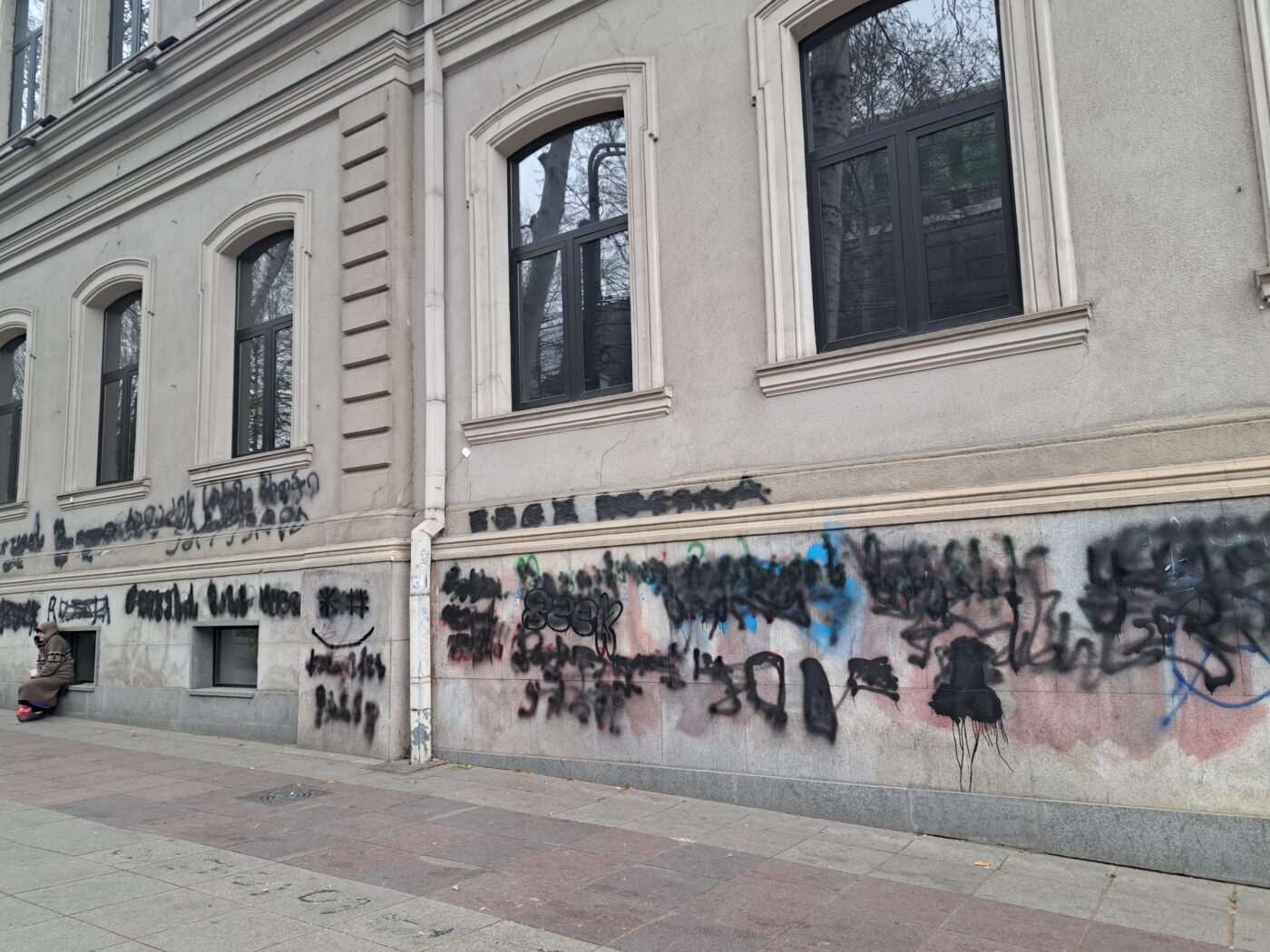
This webinar will bring together perspectives from Georgia and Germany to examine these different forms of pressure and their impact on art criticism and cultural production. It will take into account the growing influence of political pressure and censorship in the Georgia, as well as the larger backsliding of democracy and the rise of authoritarian tendencies. In addition to direct political censorship, polarisation, social pressure, self-censorship, and social media dynamics will all be discussed as strategies to further limit the space for critical cultural expression. The historical experience of Georgia also calls into question the ways in which political power has influenced intellectual and creative production, as well as the potential relevance of older forms of cultural control in the contemporary conditions.
A different viewpoint is provided by the German background. Germany, a democratic country with institutional protections for free speech, yet has its own discussions about what constitutes acceptable speech. Cultural and critical discourse can be influenced by a variety of factors, including social expectations, institutional practices, political left and right ideological influences, public disputes, and internet platform content-moderation rules. Even though these methods would not be considered political censorship in the same way, they might nevertheless provide forces that promote self-censorship or conformity.
Rather than presenting a simple opposition between a democratic and an authoritarian system, the webinar aims to examine the different ways in which freedom of expression can be constrained, negotiated, or defended. Particular attention will be given to the position of art critics and cultural professionals, whose work depends on the ability to question established narratives, challenge institutions, and express unpopular or uncomfortable perspectives.